The Belt and Road Initiative: Key Concepts by Huping Shang
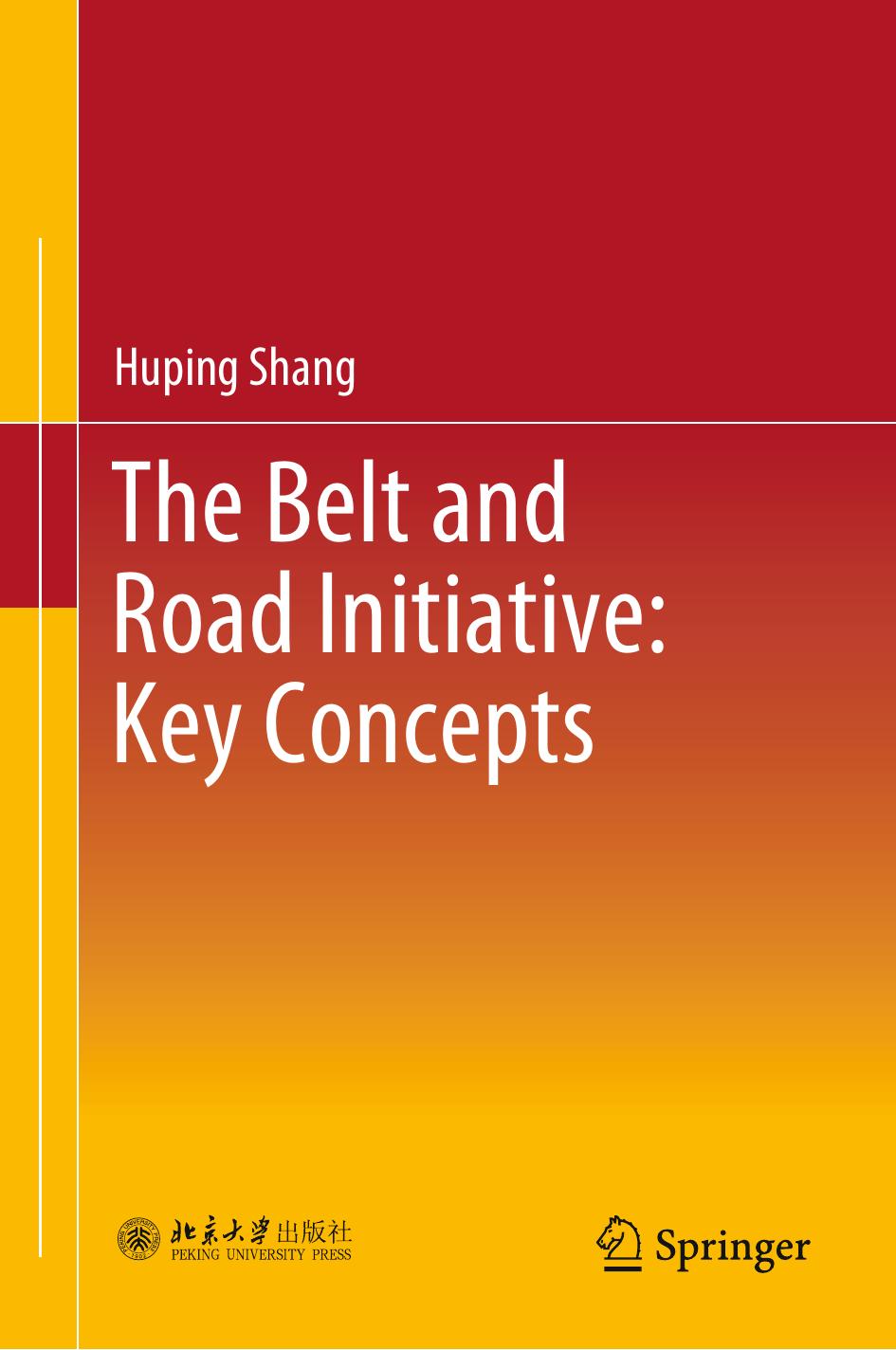
Author:Huping Shang
Language: eng
Format: epub, pdf
ISBN: 9789811392016
Publisher: Springer Singapore
Pipa Road
Pipa is also called piba. The oldest record about it was found in Liu Xi’s Interpretations of the Terms• Musical Instrument in the Han Dynasty: “Piba, originating from Hu, is played on the horse. ‘Pi’ means to strike outward with the right hand, and ‘ba’ means to pluck inward towards the palm of the hand. It was thus named according to the way it was played. So piba has its root in those “horse-back nationalities” on the Silk Road. Nomads at that time preferred playing it while riding on the horse. Later, the piba began to be replaced by another homonym word “pipa” around the Wei and Jin Dynasties.
During the Northern and Southern Dynasties, pipa was introduced to China from Persia and Xinjiang through the Silk Road. Having four strings and four ledges (no column), pipa was pear-shaped and horizontally held, and played with a plectrum. It prevailed in the Northern Dynasty and was handed down to the regions along the southern Yangtze River in the first half of the 6th century. Among the nine or ten kinds of musical instruments in the Sui and Tang Dynasties, pipa became the major one and played a vital role in the development of song and dance of the Tang Dynasty. Its importance in the band at that time could be proved from Dunhuang frescoes and Yungang stone carvings. In his famous poem Song of a Pipa Player, the poet Bai Juyi of the Tang Dynasty vividly described its sound effects in such a way that “The thick strings loudly thrummed like the pattering rain; The fine strings softly tinkled in murmuring strain. When mingling loud and soft notes were together played, Taws like large and small pearls dropping on the plate of jade.” (Translated by Xu Yuanchong)
In the late Tang Dynasty, pipa enjoyed great development in playing technique and structure. As for playing techniques, the most prominent transition was from horizontal playing to vertical playing without the aid of the plectrum. The most noticeable change in the structure was the increase of 4 ledges and 12 frets, with the short neck of the pipa elongated and the lower resonance box narrowed, making it easier for the left hand to press on the lower frets. Due to the structural improvement, the technique of playing pipa has been promoted unprecedentedly. According to statistics, there are altogether 50–60 sets of fingerings. To sum up, the fingerings were divided into four major types: lunzhi (finger rotate, using all the fingers and thumb of the right hand to produce the tremolo), tantiao (flip pick, tan means striking with the index finger, tiao with the thumb), anzhi (pressing the finger), tuila (strumming outwards and inwards).
By the 15th century, pipa had already included martial music such as the Ambush on All Sides and The Conqueror Unarms and the representative works of literary music like Moonrise, Longing for Love, Lament of a Fair Lady and Yi Dance. The so-called martial music is mainly characterized by its right-handedness and realistic
Download
The Belt and Road Initiative: Key Concepts by Huping Shang.pdf
This site does not store any files on its server. We only index and link to content provided by other sites. Please contact the content providers to delete copyright contents if any and email us, we'll remove relevant links or contents immediately.
International Integration of the Brazilian Economy by Elias C. Grivoyannis(111319)
The Radium Girls by Kate Moore(12094)
Turbulence by E. J. Noyes(8114)
Nudge - Improving Decisions about Health, Wealth, and Happiness by Thaler Sunstein(7758)
The Black Swan by Nassim Nicholas Taleb(7197)
Rich Dad Poor Dad by Robert T. Kiyosaki(6727)
Pioneering Portfolio Management by David F. Swensen(6341)
Man-made Catastrophes and Risk Information Concealment by Dmitry Chernov & Didier Sornette(6139)
Zero to One by Peter Thiel(5868)
Secrecy World by Jake Bernstein(4798)
Millionaire: The Philanderer, Gambler, and Duelist Who Invented Modern Finance by Janet Gleeson(4539)
The Age of Surveillance Capitalism by Shoshana Zuboff(4352)
Skin in the Game by Nassim Nicholas Taleb(4307)
The Money Culture by Michael Lewis(4267)
Bullshit Jobs by David Graeber(4250)
Skin in the Game: Hidden Asymmetries in Daily Life by Nassim Nicholas Taleb(4051)
The Dhandho Investor by Mohnish Pabrai(3825)
The Wisdom of Finance by Mihir Desai(3788)
Blockchain Basics by Daniel Drescher(3639)
